Are Verbal Agreements Legally Binding?
Yes — in most jurisdictions, verbal agreements are legally binding for many everyday deals, as long as the essential elements of a contract are present: an offer, acceptance, something of value exchanged, and an intention to be legally bound. However, certain categories of agreement — such as those involving land or property, guarantees, and some long-term or high-value deals — typically must be in writing to be enforceable. Even when a verbal deal is valid, proving what was actually agreed is often the real problem. Rules vary by country, so confirm specifics with a qualified legal consultant.
Are verbal agreements legally binding?
In general, yes. In most legal systems, a contract does not need to be written down to be valid. If two people agree on clear terms, exchange something of value, and intend the deal to be binding, a spoken agreement can carry the same legal weight as a signed document. You almost certainly make binding verbal contracts regularly: ordering food, hiring a tradesperson, agreeing to sell a used bike.
That said, the honest answer has two important caveats. First, many jurisdictions require certain types of agreements to be in writing — and a verbal deal in those categories may be unenforceable no matter how clear it was. Second, even a perfectly valid verbal contract is only as strong as your ability to prove it. In a dispute, the question is rarely "was there a contract?" but "what exactly did we agree, and can you show it?"
What makes any agreement legally binding?
Whether spoken or written, most jurisdictions look for the same core building blocks before treating an agreement as an enforceable contract:
- Offer: one party proposes clear terms — what will be done, delivered, or paid.
- Acceptance: the other party agrees to those terms as offered, not a modified version of them.
- Something of value exchanged: often called consideration — money, goods, services, or a promise to do (or not do) something. Some legal systems frame this differently, focusing instead on a serious mutual intention, but the idea of a genuine two-way bargain is common across jurisdictions. You can look up terms like these in our legal glossary.
- Intention to be legally bound: casual social promises ("I'll drive you to the airport") usually are not contracts. Business dealings are typically presumed to be intended as binding; arrangements between friends and family often are not, unless the circumstances suggest otherwise.
- Capacity and legality: the parties must be legally able to contract (for example, adults of sound mind), and the subject matter must be lawful.
If those elements exist, the format — spoken, emailed, scribbled on a napkin — usually matters less than people assume. The exceptions are covered below.
Why are verbal agreements risky if they're valid?
The core problem with a verbal contract is not validity; it is proof. A written contract records its own terms. A verbal one lives in two people's memories, which fade, diverge, and conveniently reshape themselves once money is at stake.
Common failure points include:
- Disputed terms: both sides agree there was a deal but remember the price, deadline, or scope differently — and both may genuinely believe their version.
- He-said-she-said: with no record and no witnesses, a court or arbitrator has to weigh one person's word against another's, which makes outcomes unpredictable for everyone.
- Missing details: spoken deals rarely cover what happens if things go wrong — late payment, defects, cancellation. Written contracts force those conversations to happen up front.
- Denial: the other party may simply deny any agreement existed, leaving you to reconstruct it from circumstantial evidence.
None of this means a verbal agreement is worthless. Courts enforce them regularly. But enforcing one typically costs more time, money, and uncertainty than enforcing a written contract covering the same deal.
Which agreements usually must be in writing?
Most legal systems carve out categories of agreements that must be in writing (and often signed) to be enforceable. The exact list varies by country, but the following categories appear again and again in some form:
| Category | Why writing is typically required |
|---|---|
| Sales or transfers of land and real property | High value and permanence; most systems demand written, often formally executed, documents |
| Guarantees (promising to pay someone else's debt) | Serious personal exposure taken on for another's obligation |
| Marriage-related agreements (e.g. prenuptial arrangements) | Long-term personal and financial consequences; formalities often strict |
| Long-term agreements (contracts that cannot be completed within a short statutory period) | Memory becomes unreliable over long spans |
| High-value transactions above a set threshold | Some jurisdictions require written evidence once value exceeds a limit |
These are general patterns, not universal rules. Which categories apply, what "in writing" means (a signed deed, a simple document, or even an email), and what happens when the formality is missed all vary significantly by jurisdiction. If your agreement touches property, guarantees, family arrangements, or serious money, treat writing as mandatory in practice and confirm the local requirements with a qualified legal consultant. You can read more about how contracts work generally in our contracts and agreements overview.
How can you strengthen a verbal agreement you already have?
If you have already shaken hands on a deal, you are not powerless. Several practical steps can convert a fragile spoken agreement into something far more defensible:
- Confirm it in writing immediately. Send a short, factual email or message: "Just confirming what we agreed today: you'll deliver X by [date], and I'll pay [amount] on completion. Let me know if I've got anything wrong." If the other party replies agreeing — or simply doesn't object and carries on performing — you have created contemporaneous written evidence of the terms.
- Preserve messages and emails. Texts, chat threads, voicemails, and invoices that reference the deal all help establish that an agreement existed and what its terms were. Do not delete anything, even messages that seem trivial.
- Identify witnesses. If anyone was present when the deal was made, note who they were while memories are fresh. An independent witness can be decisive in a dispute that would otherwise be one word against another.
- Document part performance. Actions consistent with the agreement — a deposit paid, work started, goods delivered — are powerful evidence that a contract existed. Keep receipts, bank records, photos, and delivery confirmations. In some jurisdictions, part performance can even help enforce a deal that arguably should have been written.
- Upgrade to a written contract. For anything ongoing, propose formalising the arrangement. Framing it as protecting both sides ("so neither of us has to rely on memory") usually lands better than framing it as distrust.
What's the best practice going forward?
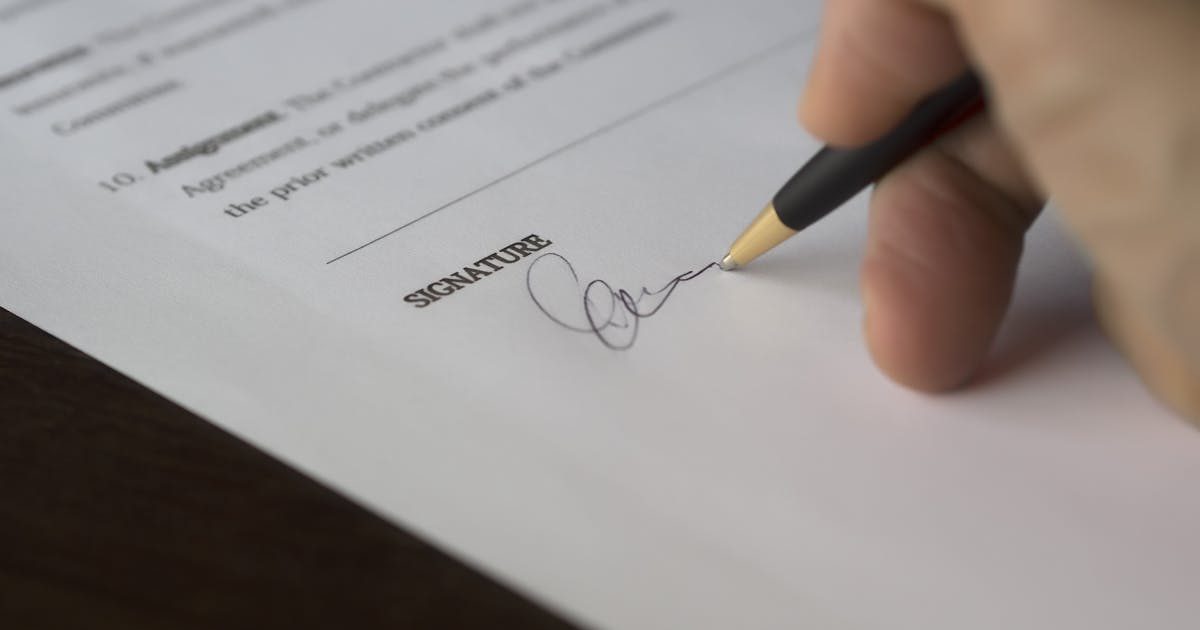
Put it in writing — always, and before performance starts. A written contract does not need to be long or intimidating. Even a one-page document covering who the parties are, what each will do, the price, the timeline, and what happens on cancellation or non-payment eliminates most of the risk a verbal deal carries. For significant agreements, take the time to check the document properly before you commit; our guide on how to review a contract before signing walks through what to look for clause by clause.
A useful habit: if a deal is worth arguing about later, it is worth writing down now. The moment of agreement — when everyone is cooperative and the details are fresh — is the cheapest possible time to create clarity. The most expensive time is mid-dispute.
When should you speak to a legal consultant?
General principles only go so far, because contract formalities, writing requirements, and evidence rules differ from country to country. It is worth getting advice from a qualified legal consultant in your jurisdiction if:
- the agreement involves land, property, a guarantee, or a family or marriage-related arrangement;
- significant money, a long duration, or your livelihood is at stake;
- a verbal deal has already gone wrong and you need to assess whether it can be enforced;
- the other party denies the agreement or disputes its terms.
Lawfe provides general legal information and can connect you with verified legal consultants across many countries — but this article is not legal advice, and it is not a substitute for a consultant who knows the rules where you live. When the stakes are real, a short consultation before you rely on a verbal promise is almost always cheaper than a dispute after it.
Related legal area: Contracts & Agreements →
FAQ
Sources & further reading
Official and academic reference resources. Rules vary by jurisdiction — check the law that applies to your situation.